Critics Hype Netflix's 'Avatar: The Last Airbender' Season 2 as a Major Leap Forward!
Netflix's Avatar: The Last Airbender Season 2 marks a significant improvement, faithfully adapting Book II: Earth. The season introduces the beloved character Toph Beifong, whose portrayal is a highlight, alongside enhanced character arcs and more natural storytelling. Despite some visual drawbacks, the narrative strides make it a worthwhile return to the Four Nations.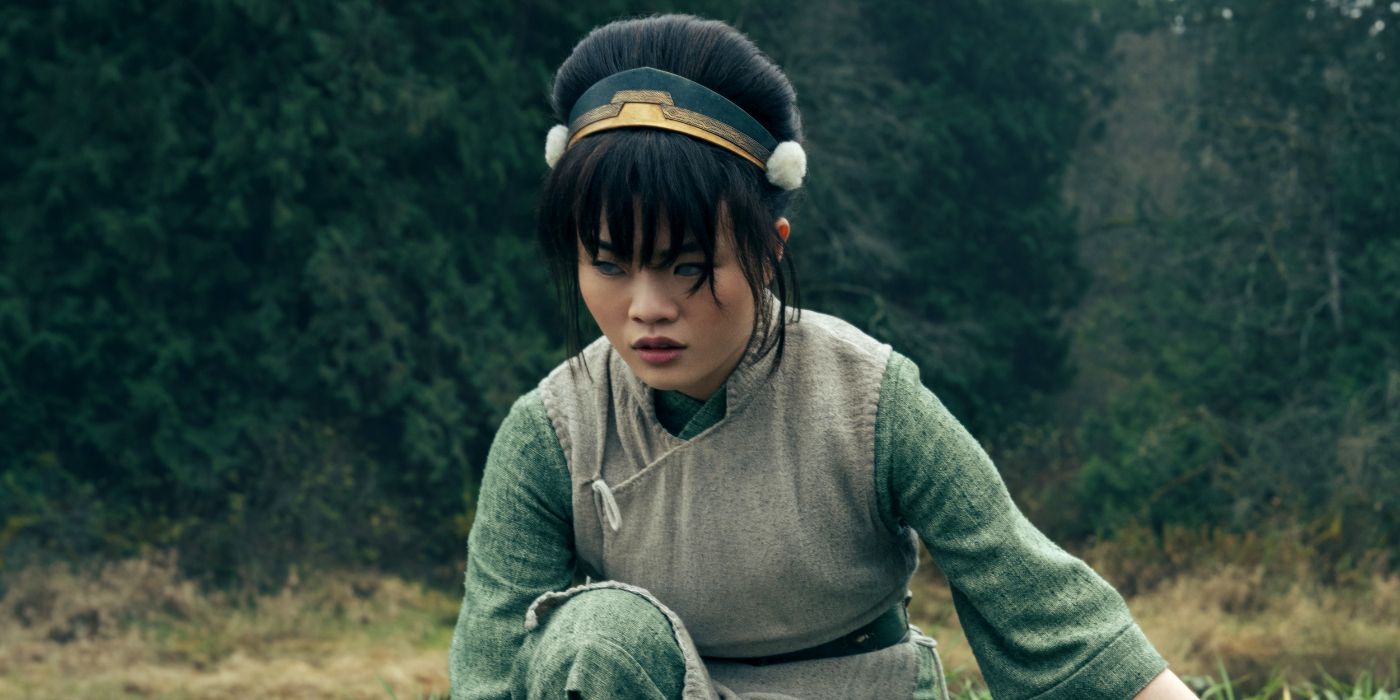
The landscape of entertainment has seen a significant shift towards live-action remakes, with beloved animated worlds frequently reimagined for a new audience. While many such adaptations have faced criticism or outright failure, exemplified by M. Night Shyamalan's much-despised film, The Last Airbender, the franchise based on Nickelodeon's acclaimed show, Avatar: The Last Airbender, continues to thrive. Following the expansion with The Legend of Korra, upcoming projects like Seven Havens, and a new movie titled The Legend of Aang: The Last Airbender, Netflix offered its own live-action take on the original series. The first season of Netflix's Avatar: The Last Airbender largely received a 'good, not great' consensus, drawing division over its condensed format and changes to the source material. However, the series secured a two-season renewal, and thankfully, Avatar: The Last Airbender Season 2 emerges as a colossal improvement overall.
Season 2 of Netflix's live-action adaptation largely covers the events of the animated series' second season, known as Book II: Earth. The narrative picks up two years after Team Avatar's victory over the Fire Nation at the North Pole. Aang (Gordon Cormier), Katara (Kiawentiio), and Sokka (Ian Ousley) embark on a quest to find an Earthbending teacher for Aang, which leads them to the unlikely guidance of a young blind woman named Toph (Miyako). Concurrently, Prince Zuko (Dallas Liu) and his uncle, Iroh (Paul Sun Hyung Lee), are living in exile, their obsessive search for Avatar Aang having ceased. Their paths inevitably cross again, but not before Zuko's sociopathic sister, Azula (Elizabeth Yu), arrives to unleash chaos and havoc across the Earth Kingdom, particularly within the elusive megacity of Ba Sing Se.
A significant criticism of Season 1 was its overly expository dialogue, which painstakingly explained every detail of the world, often redundantly for existing fans and off-putting for newcomers. Season 2 addresses this issue head-on. The dialogue and storytelling now feel much more natural, enhancing the immersive experience. Furthermore, the actors demonstrate considerably more chemistry with one another, contributing to more believable and engaging interactions. Each character is given a clear arc in Season 2, with everyone earning at least one substantial moment to shine. Sokka grapples with the trauma of losing Yue (Amber Midthunder), Katara seeks closure now that Aang's waterbending training is complete, and Zuko and Iroh are forced to confront the possibility of redemption for their past misdeeds. This character development is notably more interesting and substantial than the abridged retelling of events in Season 1. While viewers observed the cast members' aging during the two-year gap between seasons, this proved to be a blessing, as the characters genuinely feel as though they have grown and evolved, mirroring the passage of time.
One of the most anticipated aspects of Season 2 was the introduction and portrayal of Toph Beifong, a character universally beloved by fans of the original series. Those who harbored concerns can rest assured, as the