Grave Dispute: The Unsettling Political Battle Over Ex-President Lungu’s Remains
A significant controversy has erupted in Zambia surrounding the handling of former President Edgar Lungu's remains in South Africa, sparking calls for government accountability. While the Attorney General denies mishandling and clarifies legal custody, critical accounts allege abduction, unauthorized postmortems, and defiance of court orders, fueling a national debate over transparency and judicial respect.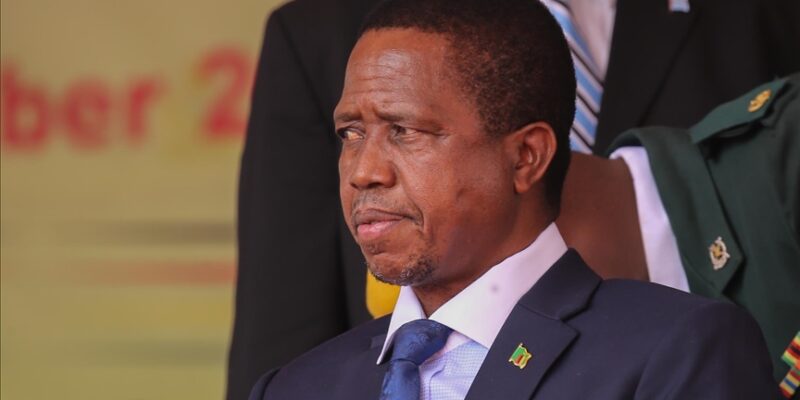
The handling of the remains of former Zambian President Edgar Lungu in South Africa has ignited a significant controversy, drawing calls for government accountability and generating widespread public debate. Differing accounts from various stakeholders have emerged, painting a complex picture of legal processes, alleged procedural irregularities, and political implications.
United for Better Zambia (UBZ) President, Apostle Hector Soondo, initiated the calls for greater government accountability, expressing concerns over how authorities managed the process. In a statement issued in Lusaka, Soondo emphasized that matters involving a former Head of State demand transparency, dignity, and clear communication to both citizens and the international community. He criticized President Hakainde Hichilema for an alleged lack of clarity, warning that the controversy risks damaging Zambia’s international image and leaving many Zambians uncertain and concerned. Soondo urged the government to provide a full account of events and reassure the nation that due process and respect were upheld, advocating for citizens to prioritize accountability, transparency, and unity in public decision-making.
In response, the Zambian government, through Attorney General Mulilo Kabesha, denied suggestions of mishandling the remains. According to reports by ZNBC, Kabesha clarified that Lungu’s body was never in the physical custody of the Zambian government at any stage after his death. He stated that the remains were held by the South African Police Service until Thursday, 23 April, when a South African court ordered their release to the family. This statement aimed to refute claims that the Zambian government had direct control over the body.
Adding a legal perspective, Tobbius C. Hamunkoyo (LLB) addressed the spread of misinformation following the Attorney General’s address. He specifically refuted false narratives circulating on social media, such as claims that Attorney General Kabesha stated President Hichilema would stay away from the funeral. Hamunkoyo emphasized that such a statement was never made and urged citizens to verify facts before sharing information. He further clarified that the Government of Zambia was at no point in custody of the late former President’s body, as the remains were under the authority of the South African Police Service due to an ongoing inquest—a formal legal process to determine the cause of death, not a political one. Hamunkoyo highlighted that the family of the late President Lungu approached the South African High Court and obtained an order for the direct release of the remains to them, indicating the matter was handled through judicial processes rather than political interference. He underscored the constitutional duty of the President of Zambia, Hakainde Hichilema, to ensure a dignified state funeral with full honors for a former Head of State, asserting that this is a matter of constitutional obligation and national respect, not personal preference or politics. Hamunkoyo urged Zambians to reject attempts to turn a legal process into political propaganda and to stand for truth.
Conversely, a highly critical narrative, presented as the “voice of the late President” from a Pretoria morgue, alleges severe irregularities and defiance of court orders. This account claims that on the evening of 22 April, state machinery, South African police, and Zambian diplomats arrived at Two Mountains Funeral Services in Johannesburg and pressured the morgue to release the remains without the family’s presence. It alleges the body was then “abducted” and entered into the Tshwane State Forensic Services under entry number 0632/26. The narrative further claims that a lie about “suspected poisoning” reported by a family member was used by Sergeant Ngwenya to open a Postmortem Docket, despite no such report or medical evidence existing. It states that by 11:00 PM that same night, the High Court in Pretoria issued an urgent order mandating the immediate return of the remains to the family’s chosen funeral home, which was allegedly ignored by direction from Lusaka. An unauthorized postmortem was reportedly conducted by Dr. Shirley Jena-Stuart from 08:30 to 14:00 on 23 April, despite the court order of 25 August, which only allowed for repatriation steps, not an invasion of physical remains. The body was allegedly withheld until 20:40 that night, only released after senior police intervention.
This critical perspective raises five key questions regarding the alleged irregularities: the “Bait and Switch” (why the body, meant for repatriation, went to a forensic table), the “Exclusion of Kin” (removal of the body without family presence), the “Nameless Diplomat” (who authorized the diplomat to act as next of kin), the “Poison Lie” (the alleged fabrication of suspected poisoning to trigger a postmortem), and the “Lawless Knife” (the authority under which the unauthorized postmortem was performed). It concludes by suggesting that the current administration’s alleged willingness to stay away from the funeral stems from having achieved their objective in the laboratory, asserting that the administration fought for months to gain physical access to the remains rather than honoring a predecessor. The narrative calls for scrutiny from the ICC and African Union, warning that if a former President can be treated this way in defiance of High Court orders, no citizen is safe.
The controversy thus involves a stark divergence in accounts, with the government and legal analysts emphasizing lawful processes and constitutional duties, while critics allege severe abuses of power, unauthorized procedures, and a blatant disregard for judicial orders and family rights.